
- Learn how to build a rat rod from scratch. Our comprehensive 2026 guide covers sourcing parts, chassis fabrication, and engine selection for your custom build.
- Finding the Right Donor: Where the Soul Begins
- Identifying the “Bones”: Why the 1920s–1950s Era is King
- The Art of the Find: Scouting Junkyards and Farm Fields
- Budgeting for Your Base: The “Low-In, High-Out” Strategy
- Choosing and Fabricating the Chassis
- Z-Framing and C-Notching: Mastering the “Slammed” Stance
- Custom vs. Donor Frames: The Great Debate
- Safety First: Structural Integrity Behind the Rust
- Powering the Beast: Engine and Drivetrain Options
- Interior and Aesthetics: The Beauty of Rust
- Suspension and Steering Setup
- Frequently Asked Questions About Building a Rat Rod
- Conclusion
- Semantic Keywords (LSI)
Learn how to build a rat rod from scratch. Our comprehensive 2026 guide covers sourcing parts, chassis fabrication, and engine selection for your custom build.
“The Rat Rod is a state of mind as much as it is a vehicle!” I’ve always believed that true automotive soul isn’t found in a showroom, but in the grease of a backyard garage. Did you know that the Rat Rod movement started as a counter-culture reaction to the high-priced, over-polished hot rods of the 90s? It’s about making something out of nothing. In this guide, I’ll show you how to take a pile of forgotten steel and turn it into a fire-breathing street machine. Let’s get our hands dirty!
Finding the Right Donor: Where the Soul Begins
- Identifying the “bones” — why 1920s to 1950s truck and coupe bodies are the gold standard.
- The art of the find: scouting junkyards, Facebook Marketplace, and farm fields.
- Budgeting for your base — keeping the initial investment low to save for the drivetrain.
Identifying the “Bones”: Why the 1920s–1950s Era is King
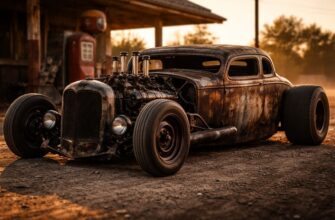
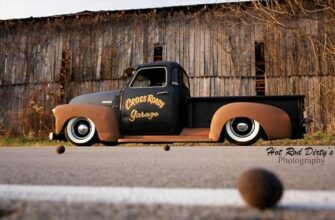
The gold standard isn’t an accident. Vehicles from this period — specifically Ford Model A’s, Model T’s, and pre-1955 Chevy or Ford trucks — possess a specific architecture that is a builder’s dream. First, they are crafted from thick, genuine steel that allows for aggressive chopping and welding without losing its integrity. Second, their narrow cabs and tall radiator shells create the iconic silhouette that defines the genre. These bodies were designed to sit on separate chassis, making body swaps or mounting them onto custom frames logistically simple. When you find a coupe or a cab from this era, you aren’t just buying scrap; you’re buying proportions that modern cars simply cannot replicate.
The Art of the Find: Scouting Junkyards and Farm Fields
The hunt is half the fun, and it requires some serious detective work. Facebook Marketplace is the obvious choice, but the real treasures are often hidden from the algorithms. You need to become a “visual predator” for rust while driving down rural backroads. Old farms frequently hide abandoned truck cabs in back lots that owners might let go for next to nothing just to clear the space. When visiting a junkyard, don’t look for complete cars. Look for cabs, doors, and shells — components you can piece together like Frankenstein’s monster. The art here is in the negotiation: always carry cash and be ready to explain your vision. People are much more likely to part with an old relic if they know it’s going to live a new life on the road rather than being melted down.
Budgeting for Your Base: The “Low-In, High-Out” Strategy
The golden rule of rat rod budgeting is simple: don’t blow your stack on sheet metal that you’re going to cut up anyway. Your goal is to acquire your “base” — the cab or coupe — for the smallest amount possible, ideally under 20% of your total budget. Why? Because the real costs are in the things that keep you alive on the road and make the car fast. The money you save on the body should go directly into the engine, transmission, braking system, and steering. A rat rod might look like a pile of junk, but underneath the surface, everything must be safe and high-performance. Invest in a fresh suspension and a reliable drivetrain instead of paying a premium for a “preserved” vintage car whose originality you’re about to destroy with a torch.
Choosing and Fabricating the Chassis
- Z-framing and C-notching: how to get that signature “slammed” look on the pavement.
- Custom vs. Donor frames — adapting an S-10 frame versus building a custom rectangular tube chassis.
- Safety first: ensuring structural integrity despite the distressed appearance.
To get a rat rod sitting “on the deck,” you have to manipulate the architecture of the frame. It’s a game of geometry where you’re moving the chassis up so the body can go down.
Z-Framing and C-Notching: Mastering the “Slammed” Stance
If you want that signature aggressive stance where the frame rails nearly kiss the asphalt, you need to master the “Z.” Z-framing involves cutting the chassis—usually behind the cab and in front of the firewall—and welding it back together in a stepped Z-shape. This effectively raises the axle mounting points relative to the rest of the frame, allowing the body to sit much lower without bottoming out the suspension.
For the rear, C-notching is your best friend. By cutting a “C” shape out of the frame rails directly above the rear axle, you create the clearance needed for the axle to travel upward. Without this, your axle would bang against the frame on every pebble. When done right, these modifications provide that menacing, low-slung profile while still allowing the suspension to do its job.
Custom vs. Donor Frames: The Great Debate
One of the biggest decisions you’ll face is what the body will actually sit on.
- The S-10 Swap: Adapting a donor frame—most commonly from a Chevy S-10—is the shortcut to a driving car. You get modern independent front suspension, power steering, and disc brakes baked into the deal. However, making an old 1930s cab look “right” on a modern frame requires a lot of masking and clever fabrication to hide the wider, bulkier modern rails.
- Custom Rectangular Tube Chassis: Building from scratch using 2×3 or 2×4 rectangular steel tubing is the purist’s choice. It allows you to tailor every inch of the wheelbase and taper to fit your specific body. It looks cleaner, more “period correct,” and gives you total control over the Z-cuts. The downside? You’re starting from zero, which means you have to engineer every mounting point for the engine, transmission, and suspension yourself.
Safety First: Structural Integrity Behind the Rust
The “Rat” aesthetic is a lie—or at least, it should be when it comes to the bones. While the body might be covered in scale and bullet holes, the chassis and suspension welds must be aircraft-grade.
Structural integrity is non-negotiable. When you Z-frame or C-notch, you must reinforce those joints with “fish plates”—diamond-shaped steel plates welded over the seams—to prevent the frame from snapping under torque. Never trust a rusted-out original frame rail; if it’s thin enough to poke a screwdriver through, it’s a death trap. Sand it back to clean metal where you weld, and ensure your penetration is deep. A true builder knows the difference between “distressed” and “dangerous.” Your car should look like it’s falling apart while being technically over-engineered for the road.
Powering the Beast: Engine and Drivetrain Options
- The classic Small Block Chevy (SBC) vs. the raw power of a Cummins Diesel swap.
- Transmission choices: why manual gearboxes add to the visceral Rat Rod experience.
- Open headers and exhaust — finding the balance between “loud” and “illegal.”
Interior and Aesthetics: The Beauty of Rust
- Minimalist interiors: using bomber seats, Mexican blankets, and custom fabricated shifters.
- Preserving the patina: techniques for clear-coating rust or forced aging of fresh metal.
- Creative repurposing: using old wrenches, beer taps, or industrial parts as functional controls.
Suspension and Steering Setup
- The iconic suicide front end: geometry, safety, and visual impact.
- Air ride vs. static: deciding how much you want your spine to vibrate.
- Steering linkage basics for low-profile builds.
Frequently Asked Questions About Building a Rat Rod
1. What is the main difference between a Hot Rod and a Rat Rod? While Hot Rods focus on polished paint, chrome, and perfection, Rat Rods celebrate “imperfection,” featuring visible welds, rust (patina), and repurposed parts.
2. How much does it cost to build a basic Rat Rod? A budget build can start as low as $3,000–$5,000 if you do the fabrication yourself and source used parts, but high-end custom builds can exceed $20,000.
3. Are Rat Rods street legal? Yes, provided they meet local safety requirements such as working headlights, tail lights, turn signals, mirrors, and adequate braking systems.
4. What is the best donor vehicle for a Rat Rod? 1930s–1950s pickup trucks and Ford Model A or Model T coupes are the most popular choices due to their iconic silhouettes and simpler frames.
5. Do I need to be a professional welder to build one? You don’t need to be a pro, but structural welding (on the chassis and suspension) must be high-quality for safety. Many builders learn as they go.
6. What is a “Z-cut” frame? It’s a technique where the frame is cut and welded in a “Z” shape to lower the body closer to the ground without sacrificing suspension travel.
7. How do I preserve the rust (patina) on my Rat Rod? Common methods include applying a coat of boiled linseed oil, a flat clear coat, or a mixture of diesel and oil to stop further corrosion while keeping the look.
8. Can I use a modern chassis for an old body? Yes, swapping an old body onto a modern chassis (like a Chevy S-10) is a popular way to get better suspension and brakes quickly.
9. What engine is easiest to install in a Rat Rod? The Small Block Chevy (SBC) 350 is the go-to choice because it is affordable, compact, and has endless aftermarket support.
10. What are “suicide doors”? These are doors hinged at the rear instead of the front. They are a staple of Rat Rod aesthetics, though they require careful latch installation.
11. Is it hard to insure a Rat Rod? It can be tricky. Most owners use specialty classic car insurance companies that understand “agreed value” for custom-built vehicles.
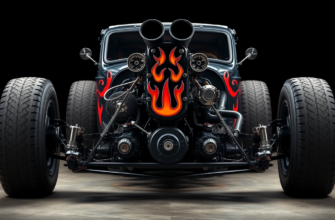
12. Why are the engines often left exposed? It’s partly for cooling, but mostly for aesthetics—showing off the mechanical “heart” of the machine is a core part of the style.
13. What is “channeling” a body? Channeling involves cutting the floor so the body sits lower over the frame rails, giving the car a lower profile without lowering the chassis itself.
14. Can I build a Rat Rod with an automatic transmission? Absolutely. While manuals are popular for the “raw” feel, many builders use automatics (like the TH350) for easier cruising.
15. How do I choose the right wheels and tires? Traditional builds often use “steelies” with wide white-wall tires or skinny “pizza cutter” tires in the front for a vintage dragster look.
16. What are “bomber seats”? These are aluminum seats inspired by WWII aircraft. They are lightweight, minimalist, and fit the industrial vibe of a Rat Rod perfectly.
17. Do I need a title for my donor car? Yes, having a legal title is crucial for registering the car. If the donor lacks one, you may need to apply for a “bonded title” or a custom-built vehicle title.
18. What is the most common steering setup? Many builders use a “Vega” style steering box or a cowl-steering setup for that traditional open-wheel look.
19. Is a Rat Rod uncomfortable to drive? Often, yes. Between the loud exhaust, stiff suspension, and metal seats, they are designed for “the experience” rather than long-distance luxury.
20. How long does it typically take to build a Rat Rod? Depending on your skill level and tools, a focused project can take anywhere from 6 months to 2 years of weekend work.
Conclusion
Building a Rat Rod isn’t just a project; it’s an act of rebellion against the mundane. We’ve covered everything from the initial frame chop to the final coat of linseed oil on your patina. Now, the only thing left is for you to pick up the torch and start cutting. Remember, in the world of Rat Rods, there are no mistakes — only “custom features.” Go out there and build something that scares your neighbors!
Semantic Keywords (LSI)
Rat rod build, Custom chassis, Patina, finish Small block, Chevy Donor, car Z-frame C-notch, Suicide front end Straight axle Wide whites Steelies Chopped top, Channeled body Lake pipes Open headers Bomber seats, Rat rod interior, Fabrication tools, Welding tips, Junkyard parts, Vintage truck body, Model A frame S10 frame swap Air ride suspension Leaf springs Drop axle Rat rod wheels Rust preservation Clear coat over rust Rat rod engine swap Flathead V8 Turbo diesel rat rod Custom shifter Moon tank Pinstriping Rat rod culture DIY hot rod Budget build Barn find Rat rod tires Disc brake conversion Wiring harness Custom fuel cell Grille shell Headlight buckets Old school hot rod Kustom Kulture Lowrider influence Bobber style Rolling chassis Project car goals
(10)